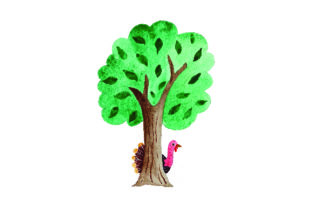
Turkey Hiding Behind Tree - Watercolor Review
As a designer who has spent years navigating the delicate balance between artistic vision and machine limitations, I approach every new machine embroidery design with a critical eye. The goal is never just to see if it looks good on a screen, but to understand how it translates into thread, tension, and fabric texture. Today, I am evaluating the Turkey Hiding Behind Tree - Watercolor, a design that immediately signals its place in the seasonal rotation for any craft business or Etsy seller preparing for the fall rush.
The First Impression: Softness Meets Seasonal Charm
When I first loaded the digital embroidery file for Turkey Hiding Behind Tree - Watercolor into my editing software, the aesthetic was instantly clear. This is not a bold, blocky graphic meant for high-visibility signage. Instead, it leans heavily into a whimsical, painterly style. The watercolor effect suggests soft edges, blended gradients, and a gentle narrative of a turkey peeking out from foliage. For holiday embroidery, this mood is crucial. It moves away from the loud, traditional red-and-orange tropes and offers something more sophisticated and story-driven.
The visual personality here is playful yet refined. The composition relies on negative space around the tree trunk and the turkey's head, which creates a natural focal point. However, as an experienced reviewer, my immediate thought shifts to execution. How does a "watercolor" look survive the rigors of fill stitch and satin stitch? The answer lies in the digitizing quality. If the color transitions are handled with fine, overlapping stitches rather than harsh blocks, this design could be a standout asset for personalized gifts and boutique merchandise.
A Real-World Scenario: The Custom Tote Bag Project
To truly test the viability of Turkey Hiding Behind Tree - Watercolor, let’s imagine a specific project: creating a limited run of canvas tote bags for a local farmers' market pop-up. These bags need to feel handmade, durable, and visually appealing enough to command a premium price. I visualize placing this design on the front panel of a natural, unbleached cotton tote.
In this scenario, the earthy tones of the tree would complement the raw canvas perfectly, while the turkey adds a touch of holiday cheer without overwhelming the product. The watercolor style works exceptionally well on textured fabrics like canvas because the slight irregularity of the weave helps mimic the organic feel of paint on paper. Unlike a solid vector shape that might look flat, the gradient nature of this embroidery project adds depth. Customers picking up these bags would likely appreciate the unique, artistic flair, setting the product apart from generic mass-produced items found in big-box stores.
Performance on Apparel and Home Goods
Beyond tote bags, the versatility of this design extends to various custom apparel and home decor items. For instance, consider a sweatshirt for a family Thanksgiving gathering. Placing Turkey Hiding Behind Tree - Watercolor on the chest area of a heather grey sweatshirt would create a cozy, festive look. The softer aesthetic makes it particularly suitable for baby embroidery projects, such as onesies or bibs, where parents often prefer gentler, less aggressive graphics.
I also see strong potential for this design as an embroidered patch. Imagine a felt-backed patch sewn onto a denim jacket or a backpack. The detailed nature of the tree leaves and the turkey's feathers would hold up well if the stitch density is managed correctly. For kitchen towels or aprons, the design fits the domestic theme of Thanksgiving perfectly, offering a charming accent that elevates a simple household item into a thoughtful hostess gift.
However, the application requires care. On stretchy fabrics like jersey knit used for t-shirts, the intricate details of the watercolor effect might distort if the stabilizer isn't robust enough. Similarly, on dark fabrics, the lighter shades inherent in a watercolor palette may require underlays to ensure visibility and prevent the background fabric from showing through the threads.
Critical Considerations for Designers and Makers
While the concept is beautiful, practical execution is where many designs fail. Here are the specific areas where you must exercise caution when using Turkey Hiding Behind Tree - Watercolor:
- Hoop Size Constraints: Always verify the dimensions before committing. If the design is large, it may not fit standard 5x7 hoops, forcing you to use a larger hoop or split the design, which can ruin the seamless watercolor illusion.
- Fabric Texture: Highly textured fabrics, like heavy wool or thick fleece, can obscure the fine details of the turkey's face and the subtle blending of the tree leaves. Stick to smoother surfaces for the best clarity.
- Stitch Density: A common pitfall with watercolor-style digitizing is over-stitching. If the stitch density is too high, the fabric will pucker, especially on lightweight materials. You may need to adjust the pull compensation settings on your machine.
- Curved Surfaces: Using this design on caps or hats presents challenges. The curvature can distort the horizontal lines of the tree branches and the vertical posture of the turkey. Test thoroughly on a cap mockup first.
- Washing Durability: For items that will undergo frequent washing, such as kitchen towels or baby clothes, ensure the thread colors are high-quality and the stitching is secure. Loose threads in complex gradient areas can unravel quickly.
Enhancing Product Value and Brand Consistency
For small shop owners and creative entrepreneurs, the choice of design directly impacts brand perception. Using a high-quality, unique asset like Turkey Hiding Behind Tree - Watercolor signals professionalism and attention to detail. It tells the customer that you care about the aesthetics of your finished product, not just the function.
This design can significantly boost buyer engagement on platforms like Etsy. When paired with high-quality printable mockups that showcase the design on real products, it helps customers visualize the final result. The whimsical nature of the art invites emotional connection, making it an excellent candidate for holiday gifts where sentiment matters as much as utility.
Furthermore, maintaining consistency in your design assets builds trust. If your brand focuses on soft, nature-inspired themes, this turkey design aligns perfectly. It avoids the clash of styles that can occur when mixing ultra-modern geometric patterns with traditional holiday motifs. By curating your commercial embroidery assets carefully, you create a cohesive catalog that feels intentional and curated.
Practical Designer Notes Before You Stitch
Before you finalize your production run or list your items for sale, follow these essential steps to ensure success:
- Test on Scrap Fabric: Never skip the test run. Stitch the design on a scrap piece of the exact fabric you plan to use. Check for puckering, thread breaks, and color accuracy.
- Review Thread Colors: Examine the color palette closely. Ensure the contrast between the turkey and the tree is sufficient. Sometimes, what looks distinct on a monitor gets muddy in thread.
- Inspect Small Details: Zoom in on the digital file. Are there tiny letters or extremely fine lines? These often get lost or turn into knots during stitching. Be prepared to simplify if necessary.
- Use Proper Stabilizer: The right stabilizer is non-negotiable for complex designs. For watercolor effects on medium-weight fabric, a cutaway stabilizer often provides the best support to maintain the integrity of the stitches.
- Check Licensing: As a business owner, always confirm the licensing terms of the embroidery file. Ensure you have the rights to sell finished goods or digital downloads if that is part of your business model.
- Compare Light and Dark Backgrounds: Visualize how the design looks on both light and dark fabrics. You may need to adjust the underlay settings depending on your base material.
Final Verdict
Turkey Hiding Behind Tree - Watercolor is a promising addition to any designer's library for the upcoming season. Its ability to blend whimsy with a soft, artistic touch makes it ideal for handmade products that aim to stand out in a crowded market. While it requires careful consideration regarding fabric choice and stabilizer use, the potential payoff in terms of customer satisfaction and brand elevation is significant. Whether you are decorating a single personalized gift or producing a batch of small shop products, this design offers a fresh take on a classic theme. Just remember to test, tweak, and trust your expertise as a maker to bring this digital vision to life.